A ledger, not a list.
Every unit in the building carries its owner, its declaration, its age, its location and the duty still owed on it. Every change is a movement with a reason and a person behind it. Nothing is edited in place.
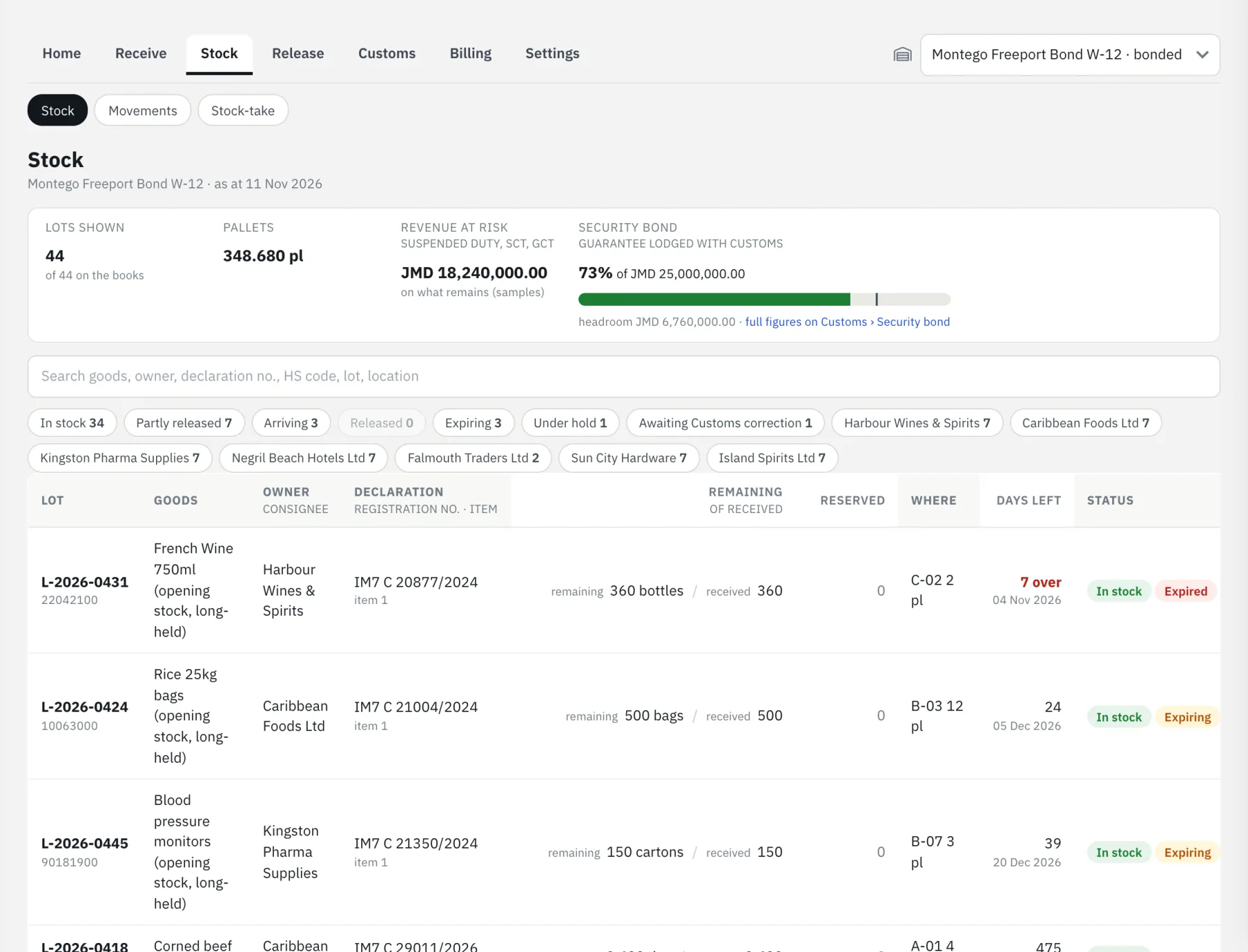
Stock: every lot with remaining quantity, location, days left in bond and status, under the revenue at risk and the security bond.
Click a row and the whole story opens beside it.
Details, movements, documents and charges are four tabs on the same lot. Create release, Put on hold and Extension are the only ways forward, so nobody can quietly change a figure.
- Status that means something
- In stock, partly released, arriving, expiring, expired, on hold. Expired stays red until a release, a re-export or a granted extension.
- Revenue at risk
- Duty, SCT and GCT suspended on what remains, to the cent.
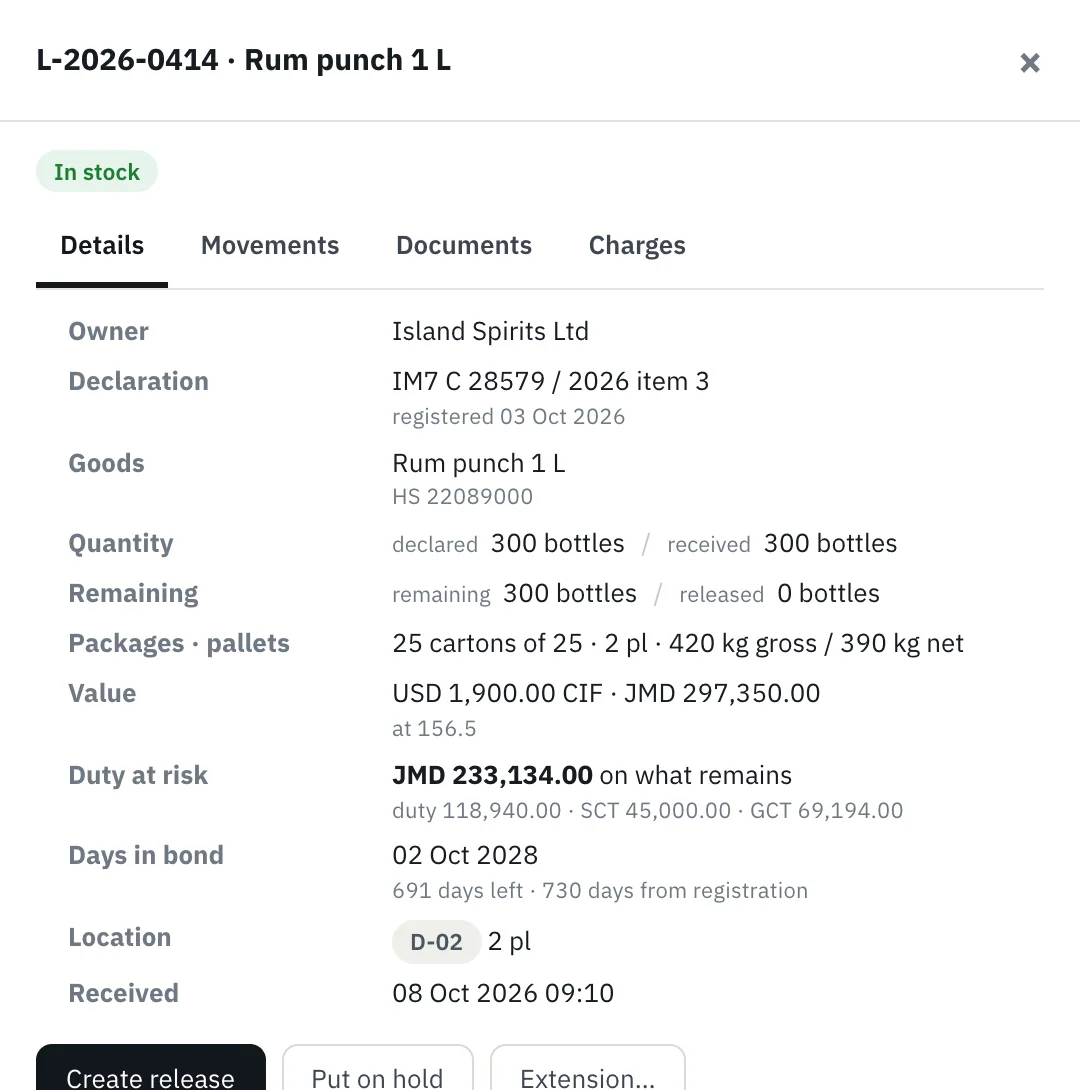
The lot panel for L-2026-0414, rum punch: owner, declaration, quantities, duty at risk, days in bond and location.
A mistake is reversed, never deleted.
Every change to stock is a line here: receipts, releases, adjustments, transfers, holds. The filters are the questions an auditor asks: which lot, which owner, what kind of movement, which month.
- Reverse
- Writes the opposite movement with a reason, keeping both on the record.
- Who and when
- Every line carries the reference it came from and the person who did it.
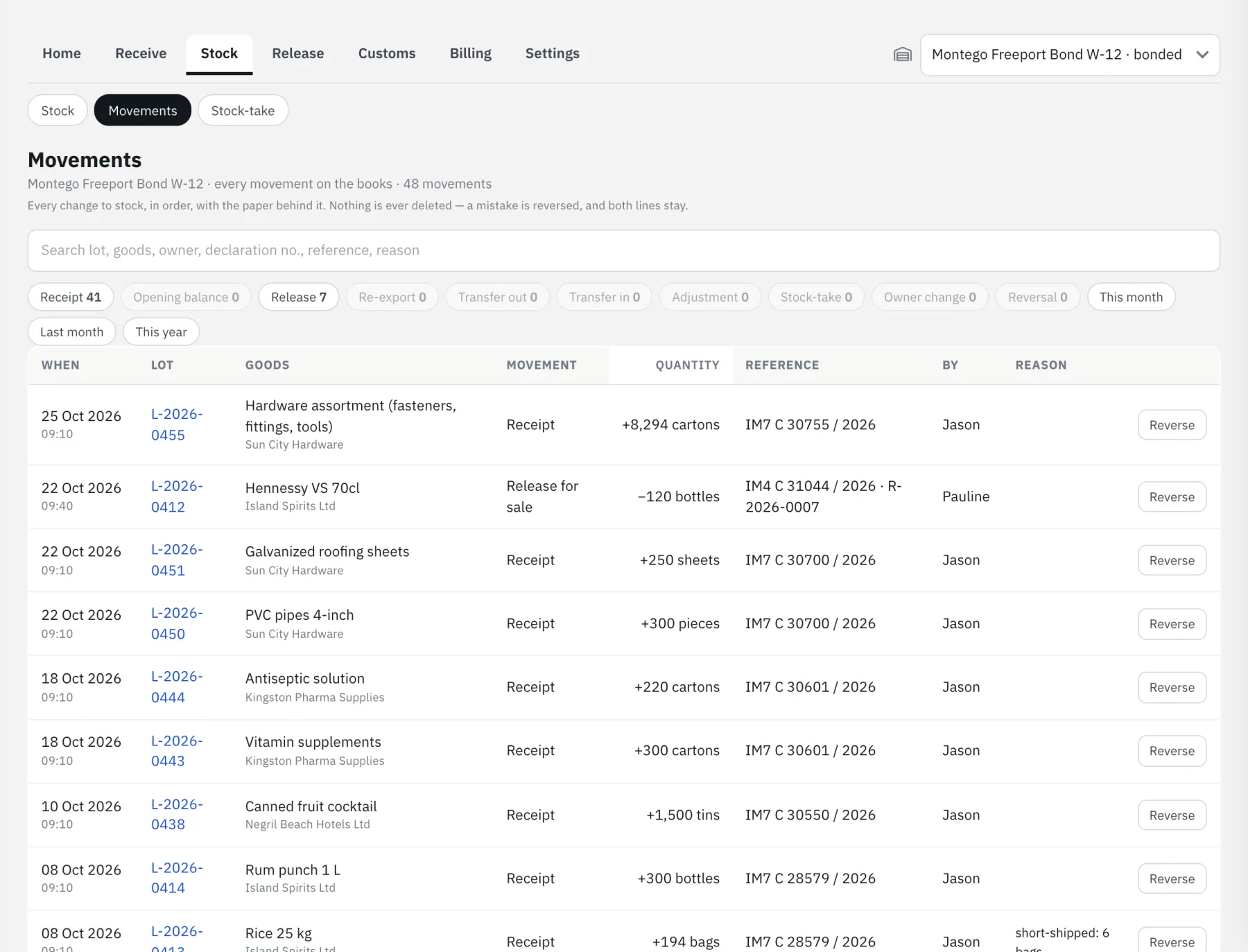
Movements: the warehouse ledger with date, lot, goods, movement, quantity, reference and who did it.
A count that is really a count.
A stock-take is a session. Count sheets print by location with the book figure hidden behind a blank box, the clerk counts with the officer, and each difference becomes an adjustment with a reason.
- Blind counts
- The sheet never shows the running figure, so nobody copies the book.
- Variances
- Each one is an adjustment movement, signed by the person who accepted it.
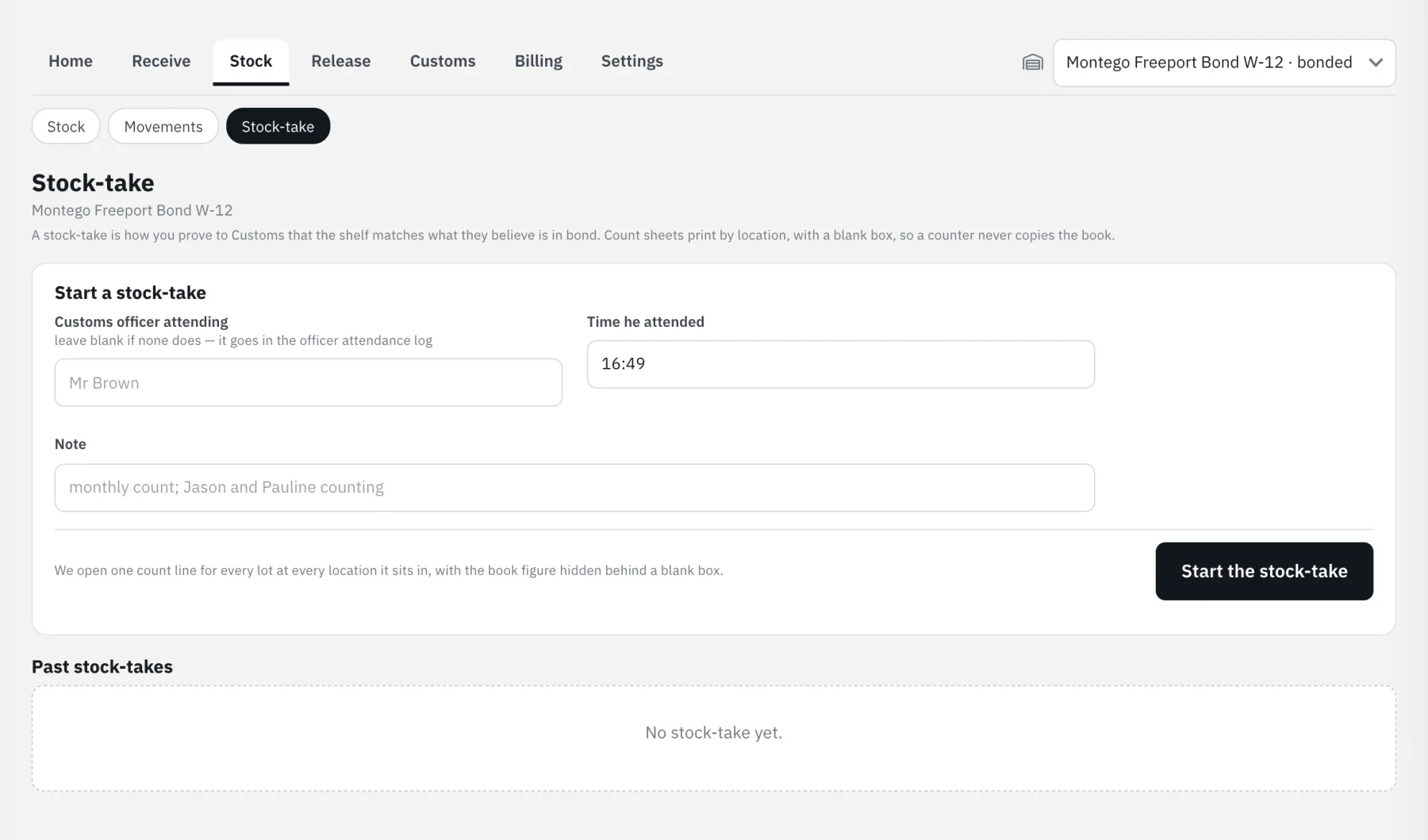
Start a stock-take: the officer attending, the time and a note.
Counts during a stock-take; never adjusts stock.
Holds, extensions, transfers and adjustments.
With the optional owner login, sees only their own lots and movements.
Walk us through your warehouse.
Tell us how yours runs and we will tell you honestly whether this fits yet. We are onboarding a limited number of sites, and configuration starts from that conversation.
Tell us about your warehouseScreens from the sample warehouse, Montego Freeport Bond W-12, and the sample transit shed. Names and figures are invented.